When market forces and consumer choices are piling on the pressure, it’s nice to know that
machinery suppliers are already in position to give helping hand and help appease customers
with high-technology solutions
Founded in 1957, Coroos is a Dutch family business that is among Europe’s top three producers of preserved fruits, pulses and vegetables in jars, cans and flexible packaging. Its products are available in many European supermarkets, in the form of premium labels, private labels and basic products – on both the groceries shelf and in refrigerated sections. Since its first production site was built in 1960, it has put product evolution and consumer tastes at the top of its agenda, where, over the decades it has witnessed constant market and consumer behaviour changes, to which it has had to adapt. These changes, including a growth in the number of eating occasions and the increase in the number of smaller households, have formed the basis of its ongoing product and packaging development, where it has led the field in terms of introducing small packaging in cans and glass and coupled to flexible packaging.
Recyclability
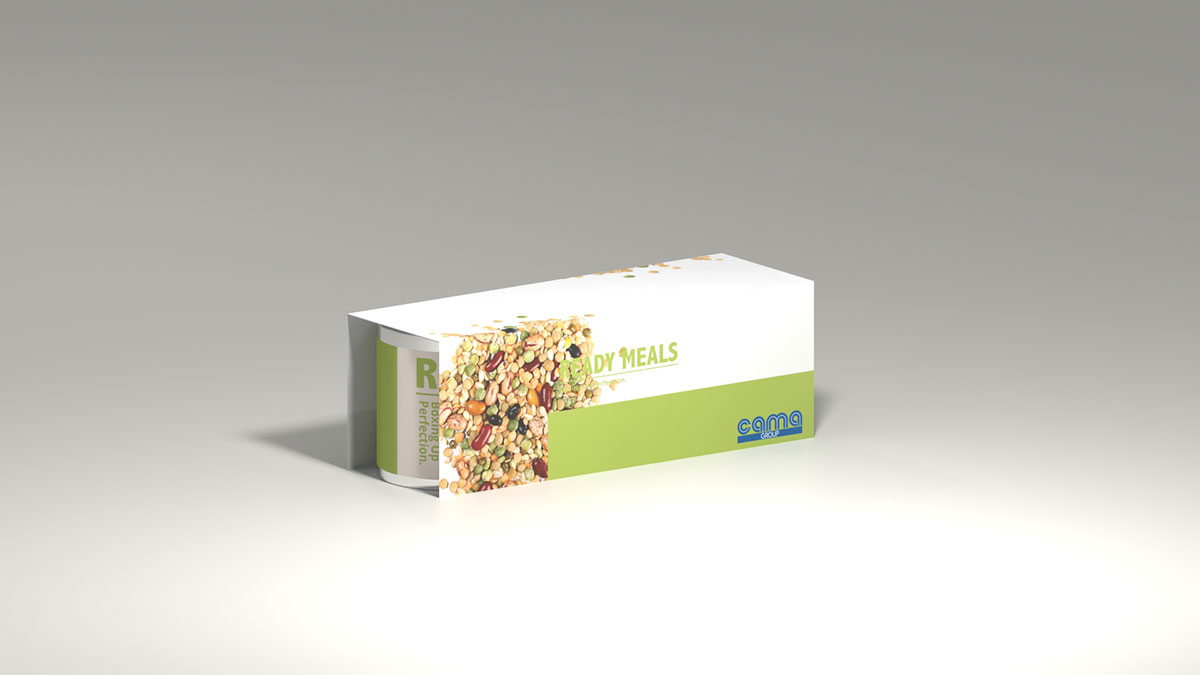
One of the most recent packaging trends, driven by a growing consumer dislike for excessive plastic packaging, is the use of secondary packaging that employs easily recyclable cardboard as a replacement for shrink-wrapped plastic. Director George Oostrom was quick to realize that plastic was falling out of favor and began researching the market for an alternative technology. Having already had a positive experience with Cama Group in previous secondary packaging solutions, and backed by his general appreciation of the quality of machinery from Northern Italy, he invited Cama to help solve his sustainability challenge.
Trust and experience

“As a family company, we don’t have the resources to take guesses at the suitability of a partner or technology,” explains George Oostrom, “so many of our business relationships are based on trust and experience. We knew we had to move away from multi-material packaging towards more cardboard and mono-material plastic solutions. Where we can’t replace materials, we’re also looking at ways to save on their use, including thinner can walls. We also face different emphases across Europe, where some countries favor reuse, while others favor recycling. It’s a balancing act.”
In addition to environmental concerns, Coroos has to cater to varying consumer demands and packaging variety, necessitating secondary packaging technology that can keep pace with these changes. “We have to consider changing production formats halfway through a shift,” Oostrom explains. “Our lines have to change not just for filling, but also for secondary packaging. Cans go in boxes while plastic containers go in sleeves, and the numbers and arrays of each can change depending on the end customer.”
“We installed our first Cama machine back in 2002, and the latest one six months ago,” Oostrom elaborates. “There is a lot of competition out there, but I feel we’re at a high packaging quality level that matches our needs. Our technicians know the technology intimately, and my faith in Northern Italy’s machinery quality and expertise is always repaid. It’s also difficult to find good technical people to operate some of our machines, so ease of use is a priority, as is reliability. Another trick I use is to look at what the bigger companies are using, and with Cama present in many of these, I know I’ve made the correct choice.”
Superior OEE

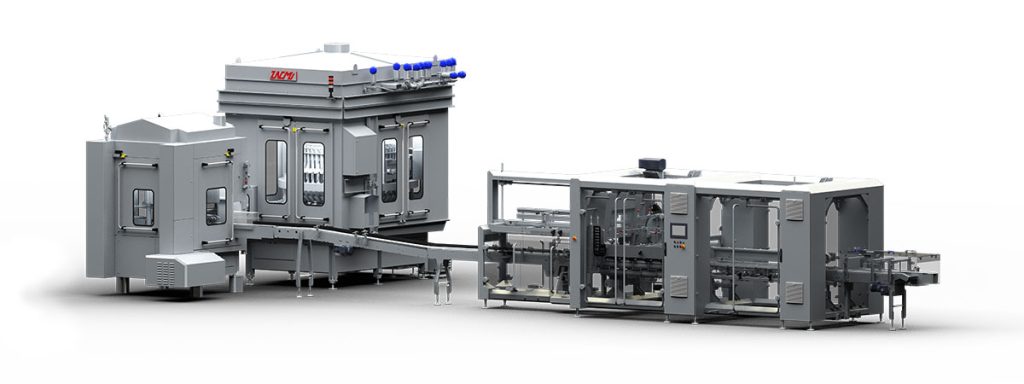
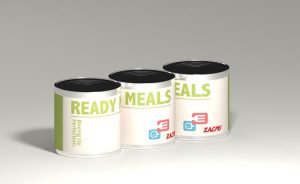
Sustainability isn’t just about materials; it can also be addressed by machines offering superior overall equipment effectiveness (OEE), particularly through technology designed and fine-tuned to the specific needs of an application. Delivering this capability is Zacmi, a supplier of filling and sealing lines that Oostrom relies upon, and that is also seen at larger companies. “We’ve used Zacmi machines for a long time,” Oostrom explains. “As well as offering higher speeds and developments closely allied to my product’s needs, Zacmi is based in Northern Italy, so I know the quality is there. They also work closely with Cama on several projects, providing good supplier synergy.”
“We were already producing 200 million tins at our plant with equipment built in the 1960s,” Oostrom reminisces. “We decided to change the filling, closing, and seaming machines, reverting to the Zacmi concept. As a result, we removed the old machines and replaced them with a solution that provided higher quality, higher speeds, better hygiene, and increased worker safety.”

Working together
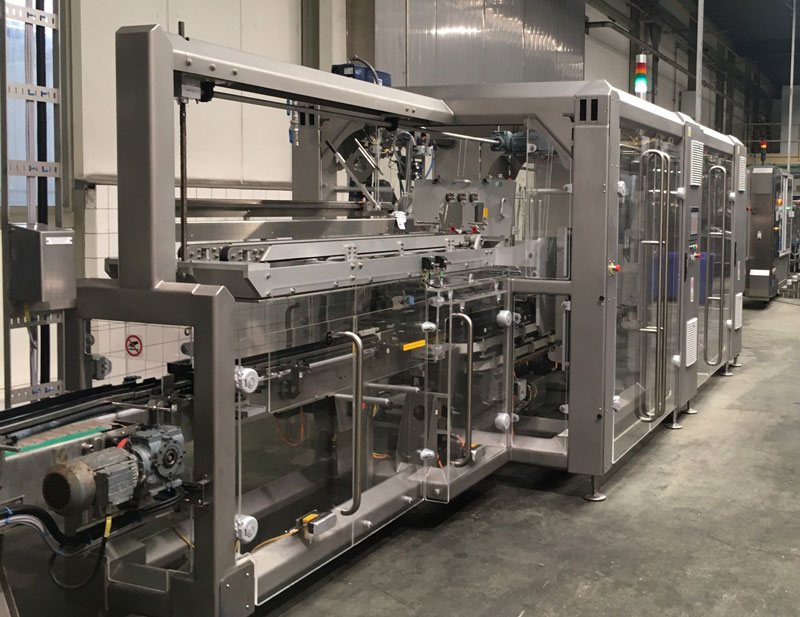
“Zacmi is much further ahead in terms of machine innovation,” Oostrom elaborates, “and companies in the region were starting to work together, allowing for full lines to be designed with complementary technologies. This relationship is demonstrated by the close coupling of Cama and Zacmi.”
“When I look to justify my investments in technology, I don’t consider the CAPEX as the defining factor,” Oostrom concludes. “Could I find machines that are cheaper? Probably. But would they offer me the same levels of quality, throughput, and whole-life costs? Almost certainly not. You must consider performance as part of the sustainability equation. Being ‘green’ and being seen to be ‘green’ is not all about materials. It’s about overall equipment effectiveness, maintenance costs, consumable consumption, and a myriad of other factors that influence a machine’s impact. Finally, as a family company, peace of mind and trust play a huge role, and having two companies that are already good friends is a real bonus.”